7 Reasons Your Lifts Feel Heavier in a Cold Gym
Quick Answer: Cold reduces muscle contraction speed and force, stiffens connective tissue and joint fluid, slows nerve conduction, weakens grip disproportionately, and makes bars and plates physically harder to hold. The combined effect on a working set is real and it is largely reversible with a longer, more gradual warm-up — 15 minutes rather than 5, with more ramping sets and layers you keep on until the working sets.
It is the same program, the same weight, the same you. It is 48 degrees in the garage and everything feels like someone added a plate.
Seven things are actually different, and six of them you can do something about this morning.

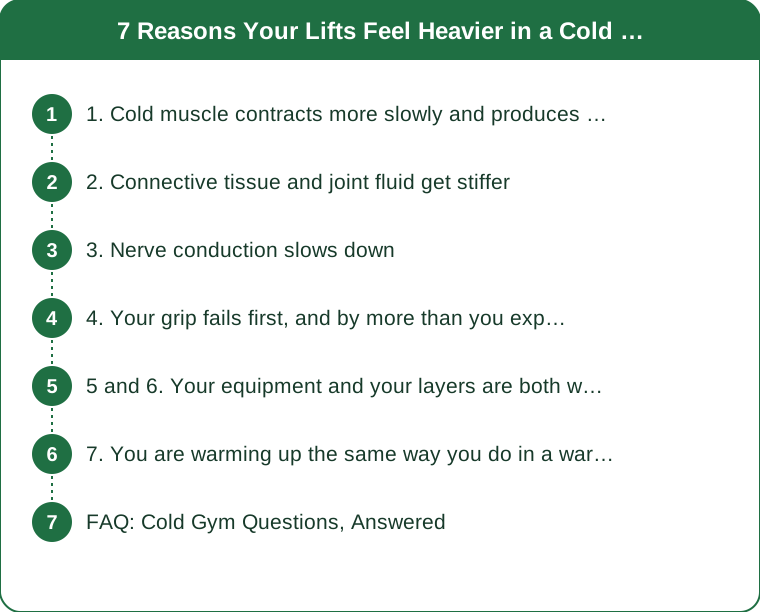
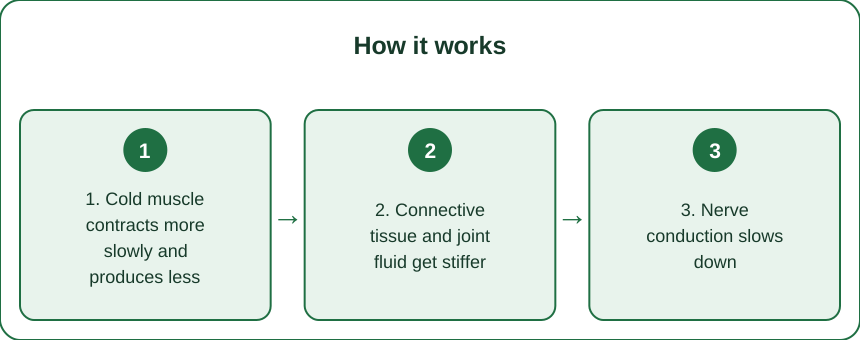
1. Cold muscle contracts more slowly and produces less force
Muscle contraction depends on enzyme-driven chemical reactions, and those reactions are temperature-sensitive. Drop muscle temperature and the rate of force development falls with it.
The effect is most obvious in anything explosive. A cold power clean, a jump, or a fast first pull off the floor feels sluggish in a way that a slow grinding squat does not, because rate of force development is hit harder than maximum force.
This is also why the first working set of a cold session so often feels the worst and the third feels normal. You have been warming the muscle up with the actual work.
The practical version: in a cold gym, general warming beats specific warming. Ten minutes of easy cardio raises muscle temperature far more effectively than three extra sets of the lift itself.
2. Connective tissue and joint fluid get stiffer
Tendons, ligaments, and fascia are all less compliant when cold. So is synovial fluid — the fluid inside your joints becomes more viscous at lower temperatures, which is exactly why joints feel creaky in a cold room and loosen up after moving.
For lifting, this shows up as reduced range of motion before it shows up as reduced strength. Squat depth is harder to reach, the bottom of a bench feels tighter, and overhead position feels restricted.
The risk here is subtler than it sounds: people usually do not notice the range reduction, they compensate for it. A slightly shallower squat with a slightly different bar path is how a cold session turns into a form problem.
The fix is movement, not stretching. Dynamic range of motion work at gradually increasing depth does what static stretching in a cold room cannot.
3. Nerve conduction slows down
Nerve signals travel more slowly at lower temperatures. The effect is measurable, and it means the timing of muscle activation is slightly off.
In practice this feels like poor coordination rather than weakness. The lift feels clumsy, your balance in a single-leg movement is worse, and the bar path wanders in a way it does not at 70 degrees.
It also affects proprioception — your sense of where your body is in space. In a cold gym, you are getting slightly degraded feedback about your own position, which is worth knowing before you attempt something technical.
Programming implication: a cold session is a bad time for a new movement or a technique-heavy lift. Save skill work for a warm room and use the cold session for movements you already own.

4. Your grip fails first, and by more than you expect
Grip is disproportionately affected by cold, for two reasons that compound.
Peripheral vasoconstriction. In cold conditions, your body reduces blood flow to the extremities to protect core temperature. Less blood flow to the forearms and hands means less endurance and less force, and it happens well before you feel cold.
Cold steel pulls heat out of your hands fast. A bare barbell in a cold garage is a heat sink. Ten seconds of setup on a heavy deadlift costs you meaningful hand temperature, and cold fingers simply do not close as hard.
This is why grip-limited lifts — deadlifts, rows, carries, pull-ups — feel disproportionately hard in the cold while a leg press feels almost normal.
The fixes are easy: keep your hands in your pockets between sets, warm the bar with your hands before the heavy pulls, and use straps for volume work without treating it as a failure of character.
5 and 6. Your equipment and your layers are both working against you
5. Cold plates, bars, and rubber behave differently
Bumper plates get harder and bounce differently in the cold. Barbell knurling feels sharper against cold skin. Rubber flooring gets stiffer and less grippy, and cold shoe soles have less traction than warm ones — which matters more than people think on a heavy squat walkout.
Cold also makes chalk less effective, because it is managing moisture on skin that is not producing much.
6. The layers you need for warmth restrict how you move
A hoodie changes shoulder mobility. Long sleeves alter where the bar sits on your back. Sweatpants change how you feel your hip position in a squat.
None of these are large individually, and together they mean the lift feels unfamiliar. The answer is not to train cold in a tank top — it is to do your ramping sets in layers and remove the outer one for working sets, so the movement you perform under load is the movement you practiced.
Keep a beanie on. A surprising amount of the subjective misery of a cold gym is head and ear temperature, and it costs nothing to fix.
7. You are warming up the same way you do in a warm room
This is the one that undoes most of the other six, and it is the most common error.
A five-minute warm-up that works in a heated commercial gym is not adequate at 48 degrees. Everything above — muscle temperature, tissue compliance, nerve conduction, blood flow to the hands — responds to a longer, more gradual entry.
What a cold-gym warm-up looks like: ten minutes of easy cardio to genuinely raise core temperature, then dynamic range of motion work, then more ramping sets than usual with smaller jumps. Total 15-20 minutes before the first working set.
Keep moving between sets. Long rests in a cold room mean you cool back down between efforts, which is why set five can feel worse than set two despite better warming. Walk around, keep the layers on, stay off the cold floor.
And adjust the expectation. A cold session that goes 10 percent lighter and stays technically clean is a good session. Forcing the programmed number in bad conditions is how people get hurt.
This is general information, not medical advice. Sharp joint pain, pain that changes how you move, or any injury that does not settle should be assessed by a healthcare professional.
FAQ: Cold Gym Questions, Answered
Is lifting in the cold actually dangerous?
Not inherently, and people train in cold garages year-round without issue. The risk comes from treating it like a warm session — inadequate warm-up plus reduced range of motion plus compensating technique is the combination that causes problems, not the temperature itself.
Should I use a space heater?
If you have one, yes. Raising the room even into the low 60s removes most of these effects and is far more efficient than trying to warm up around them. Point it at where you will be lifting, and turn it on 20 minutes before you go out.
Do I need to eat differently?
Not really, but hydration is worth attention — people drink noticeably less in cold conditions and thirst is blunted, and dehydration compounds the joint stiffness you are already dealing with.
Will I lose progress training in a cold garage all winter?
No, provided you adjust the warm-up and autoregulate the loads. Plenty of strong people train in cold spaces year-round. What costs progress is repeatedly missing programmed numbers, getting discouraged, and training less — which is a motivation problem the space heater also solves.
TL;DR:
- Cold slows muscle contraction, stiffens joints and connective tissue, and slows nerve conduction — the bar genuinely feels heavier
- Grip suffers most, because blood flow to the hands drops and a cold bar pulls heat straight out of them
- Warm up for 15-20 minutes, not 5: general cardio first, then dynamic range work, then smaller ramping jumps
- Keep layers on for ramping sets, remove the outer one for working sets, and keep moving between sets
- Skip technique-heavy new movements in the cold, and accept a lighter clean session over a forced sloppy one
None of this means a cold gym is a bad gym. It means the warm-up you have been using was written for a different room.
Keep Reading
This article is for general informational and styling purposes only. Fit, sizing, and product availability may vary.