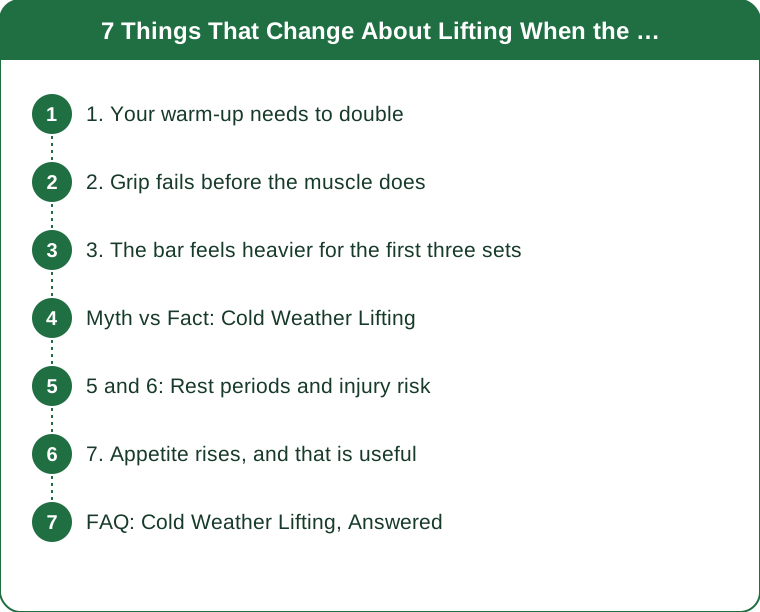
7 Things That Change About Lifting When the Gym Gets Cold
Quick Answer: Seven things: warm-ups need to roughly double, grip strength falls on cold steel, the bar feels heavier in the first sets because rate of force development drops, rest periods cool you down faster than they used to, appetite rises which is useful for building, injury risk goes up mainly at the start of sessions, and motivation to train at all falls once it is dark. Six of the seven are solved by heating the space for fifteen minutes beforehand and extending your warm-up. The seventh is a scheduling problem.
Cold does not make you weaker in any lasting sense. It makes your first three sets unrepresentative.

1. Your warm-up needs to double
Muscle temperature drives force production and rate of force development, and both matter for lifting.
Ten to fifteen minutes rather than five to seven. In a cold garage this is the single most important change.
Start with general work, not the barbell. Bike, rower, brisk walking, or skipping - anything that raises core temperature.
Add more warm-up sets, not heavier ones. Empty bar, then small jumps. Five warm-up sets is not excessive on a cold morning.
Keep the warm-up continuous. Long gaps between warm-up sets in a cold room means starting over.
And do not use the first working set as a warm-up. That is where the tweaks happen, and it is a habit that costs people weeks.
2. Grip fails before the muscle does
Cold steel drains heat from your hands fast, and grip strength falls measurably as hands cool.
Reduced tactile feedback means over-gripping, which fatigues the forearms early.
Deadlifts are affected most, and grip is often the limiter on cold-day pulls even for people who never think about grip.
Warm the bar. Hands on it for thirty seconds, or a quick wipe with a warm cloth.
Chalk is more useful in the cold, not less - cold hands sweat less but grip worse, and chalk addresses the friction rather than the moisture.
And straps are a legitimate tool on cold days for high-rep pulling work, when grip failing early would compromise the whole session.
3. The bar feels heavier for the first three sets
Rate of force development drops more than maximal strength does in cold conditions, so the bar feels slow before it feels heavy.
Slow bar speed then triggers doubt, and doubt on a heavy lift is its own problem.
Judge the session on set four, not set one. By then you are warm and the numbers are honest.
Consider reordering. Putting the technical lift second, after a less demanding movement has warmed you, works well in cold months.
Expect a small genuine reduction on maximal work in a cold garage, and do not fight it - work in percentages rather than chasing absolute numbers through winter.
And use bar speed as your gauge rather than feel. Feel is unreliable when you are cold; bar speed is not.

Myth vs Fact: Cold Weather Lifting
Myth: cold weather makes you weaker. Fact: it reduces performance in the first part of a session through temperature effects. Your actual strength has not changed and returns as you warm.
Myth: you should train lighter all winter. Fact: warm up longer instead. Systematic deloading through winter costs months of progress for a problem that a heater solves.
Myth: static stretching before lifting prevents cold-weather injury. Fact: it does not, and long holds immediately before heavy work slightly reduce output. Dynamic warm-ups and warm-up sets do the job.
Myth: cold weather causes joint damage. Fact: cold increases stiffness and can increase pain in existing conditions, but it does not cause damage.
Myth: you burn more calories lifting in the cold. Fact: shivering does raise expenditure slightly, but in an actual training session the effect is negligible.
Myth: a hoodie is enough. Fact: a hoodie warms your torso and does nothing for your hands, which is where cold actually limits lifting. Warming the room beats warming yourself.
5 and 6: Rest periods and injury risk
You cool down faster between sets than you used to. A three-minute rest in a 10C garage means starting the next set noticeably colder.
Keep moving during rest. Walking, easy mobility, or simply not sitting down. This changes sessions substantially in cold rooms.
Wear layers you remove for working sets rather than trying to stay warm through the whole session in one layer.
Injury risk concentrates at the start of sessions, not the end. The pattern of cold-weather strains is early-session, in the first heavy set, in an under-warmed body.
Lower back and hamstring are the most commonly affected, because hinging movements load long muscle at high force early in a session.
And rushing is the actual risk factor. People rush warm-ups in cold rooms because standing around is unpleasant, which is the whole mechanism.
7. Appetite rises, and that is useful
Appetite typically increases in cold weather, and for anyone trying to build muscle this is convenient rather than a problem.
Winter is a reasonable time to run a small surplus - training indoors, eating more easily, and less social pressure around summer clothing.
Protein intake tends to rise naturally with appetite, which supports the training.
Watch the drop in daily activity though. Non-exercise movement falls substantially in autumn, and that is a larger change in energy balance than most people account for.
Track something simple - weekly weight, or steps - rather than nothing, because autumn is where drift happens quietly.
And use the season deliberately. A winter of consistent training with slightly more food is how most people make their best strength progress, and it is largely a matter of not letting the cold shorten the sessions.
FAQ: Cold Weather Lifting, Answered
How long should I warm up in a cold gym?
Ten to fifteen minutes, roughly double a summer warm-up, with more warm-up sets rather than heavier ones.
Should I lower my working weights in winter?
No. Warm up longer and heat the space. Judge the session by set four, not set one.
Why does my grip fail on cold deadlifts?
Cold steel drains hand heat, grip strength falls, and reduced feel makes you over-grip. Warm the bar, use chalk, and use straps for high-rep work.
Is a heater worth it for a garage gym?
Yes - fifteen minutes of pre-heating before you train solves most cold-weather lifting problems at once.
When do cold-weather injuries happen?
Early in sessions, in the first heavy set, in an under-warmed body. Hinging movements and the lower back and hamstrings are most affected.
This is general information, not medical advice.
TL;DR:
- Double the warm-up to ten to fifteen minutes and add more warm-up sets rather than heavier ones.
- Cold steel kills grip - warm the bar, use chalk, and use straps for high-rep pulling.
- The bar feels heavy for the first three sets because rate of force development drops; judge the session on set four.
- Keep moving during rest periods and wear layers you strip for working sets - you cool down much faster than in summer.
- Cold-weather injuries cluster at the start of sessions, in the first heavy set, in an under-warmed body.
Winter appetite makes it a good season to build - just watch the drop in daily non-exercise movement, which is bigger than most people account for.
Keep Reading
This article is for general informational and styling purposes only. Fit, sizing, and product availability may vary.