7 Reasons Your Lifts Feel Heavier After a Bad Night's Sleep
Quick Answer: Poor sleep raises perceived exertion, drops CNS output, and slows reaction time — so the same weight can feel 10-20% heavier even though nothing about the bar changed. The fix is lowering intensity that day, not fighting through it.
You slept five hours, walked into the gym, loaded the same bar you hit for reps last week, and it felt like it gained 20 pounds overnight. It didn’t. Here are the 7 real reasons behind that gap, in the order they usually stack up against you.

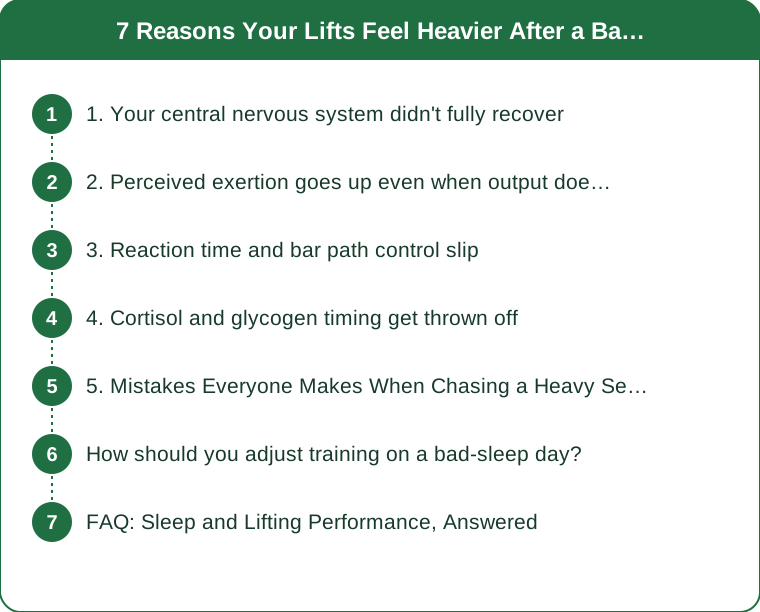
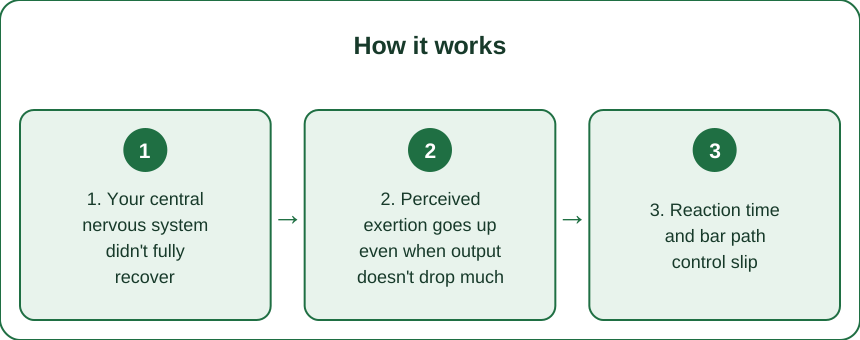
1. Your central nervous system didn’t fully recover
Heavy lifting is driven more by nervous system output than raw muscle — your brain has to recruit motor units fast and hard. Sleep is when CNS recovery mostly happens, so a short night leaves you with less firing power before you even touch the bar.
This is why a bad-sleep day often tanks your top single more than your volume sets — max effort needs the most CNS output, so it takes the biggest hit.
2. Perceived exertion goes up even when output doesn’t drop much
Studies on sleep restriction consistently show RPE (rate of perceived exertion) climbs on the same absolute load, even in cases where actual strength output barely changes. In plain terms: the bar can weigh exactly what it weighed last week and still feel like a grind.
That mismatch is real, not weakness — your brain is reporting effort differently on poor sleep, and that reported effort is what determines whether a set feels crushing or manageable.
3. Reaction time and bar path control slip
Poor sleep slows reaction time by a measurable margin — similar in some studies to mild alcohol impairment. For lifts with a technical component (squat out-of-the-hole, deadlift lockout timing), a slower reaction means more wasted motion, and wasted motion is where a lift starts to feel heavy before it’s even failed.

4. Cortisol and glycogen timing get thrown off
Sleep loss nudges cortisol higher and can blunt how efficiently your muscles use stored glycogen for fast, powerful contractions. Less available fuel per rep, delivered less efficiently, reads to your body as more work for the same load — which is exactly the sensation you’re fighting.
5. Mistakes Everyone Makes When Chasing a Heavy Session on No Sleep
Mistake 1: Trying to match last week’s numbers anyway. Chasing yesterday’s PR on today’s tank is how form breaks down under load.
Mistake 2: Adding more caffeine to compensate. It masks perceived fatigue without restoring CNS output — you’ll feel wired but still lift slow.
Mistake 3: Skipping the warm-up ramp to save energy. Under-recovered nervous systems need more ramp-up, not less, to fire properly.
Mistake 4: Ignoring the session entirely and going max-effort blind. A quick RPE check after your first warm-up set tells you honestly what kind of day it is.
How should you adjust training on a bad-sleep day?
Drop intensity 10-15%, keep the movement pattern. If your plan called for a top set at RPE 9, cap it at RPE 7 that day — same exercise, same reps, lighter bar. This preserves the skill practice while protecting you from grinding a rep with degraded reaction time.
Volume work fares better than max singles on poor sleep, so if you must push somewhere, push there instead of on your top single.
FAQ: Sleep and Lifting Performance, Answered
Does one bad night of sleep really affect strength that much?
One night rarely tanks raw 1RM strength much, but it reliably raises perceived effort and hurts technical execution — which is often what actually derails a session.
Should I skip the gym entirely after a bad night?
Not usually — just autoregulate down. A lighter, technically clean session beats skipping, unless you’re also dealing with illness or extreme fatigue.
How many nights of poor sleep before real strength loss shows up?
Most research points to cumulative restriction over several nights — 3+ nights under 6 hours is where measurable strength and power drops become consistent, not just perceived.
TL;DR:
- Poor sleep raises perceived exertion even when raw output barely drops
- CNS recovery, reaction time, and glycogen efficiency all take a hit
- Autoregulate: drop intensity 10-15%, keep the movement pattern
- One bad night rarely tanks max strength; several nights in a row does
A heavy-feeling bar on no sleep isn’t in your head — it’s your nervous system telling you the truth. Listen to it and adjust the number, not your form.
Keep Reading
This article is for general informational and styling purposes only. Fit, sizing, and product availability may vary.