7 Signs You Need a Deload Week Right Now (Not Just 'Whenever')
Quick Answer: Persistent soreness beyond 72 hours, dropping numbers on lifts you were previously progressing, disrupted sleep, and a noticeable dip in motivation to train are all signs your body needs a deload week now, not on a fixed 6-week schedule regardless of how you actually feel.
Many lifting programs schedule a deload every 4-6 weeks like clockwork. That’s a reasonable default, but your body doesn’t always follow the calendar — these seven signs matter more than the schedule.

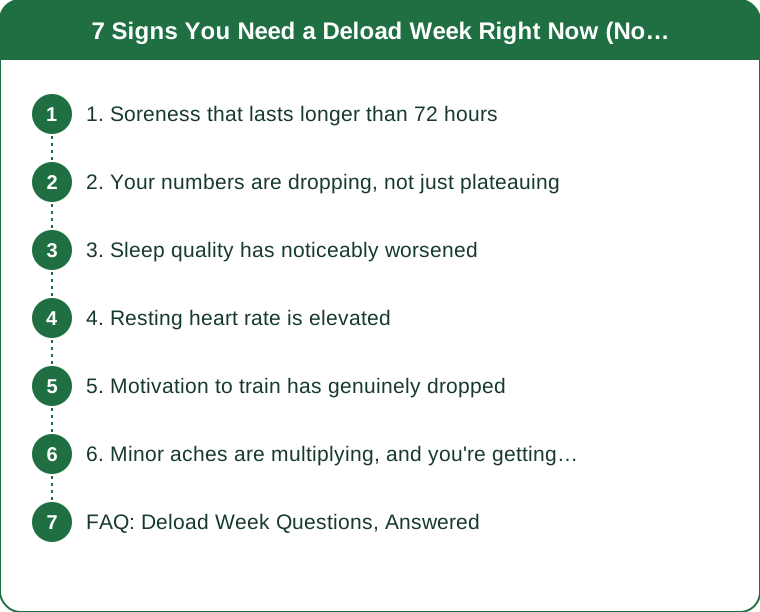
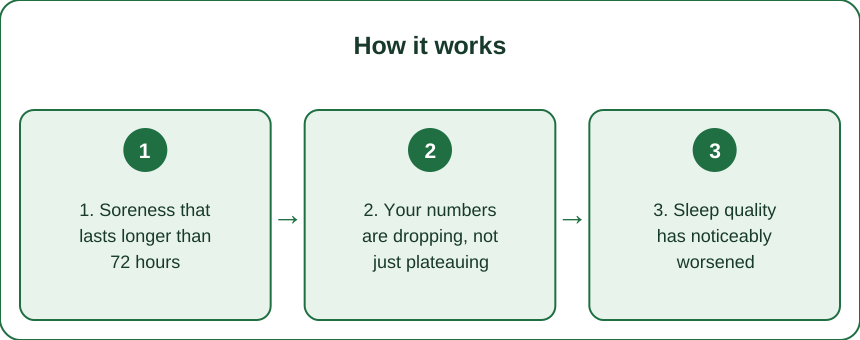
1. Soreness that lasts longer than 72 hours
Normal delayed-onset soreness fades within 2-3 days. Soreness stretching to day 4 or 5 repeatedly signals your recovery capacity isn’t keeping pace with training volume, and a deload restores that gap faster than pushing through it.
2. Your numbers are dropping, not just plateauing
A plateau means the same weight for a few sessions. A genuine decline — lifting less than you did two weeks ago with the same effort — is a stronger signal that accumulated fatigue, not lack of progress, is the actual issue.
3. Sleep quality has noticeably worsened
Overreaching disrupts sleep through elevated cortisol and nervous system stress. If falling asleep or staying asleep has gotten harder over the past two weeks with no other life changes, training load is a likely contributor worth addressing with reduced volume.

4. Resting heart rate is elevated
A resting heart rate consistently 5-10 beats above your normal baseline, especially first thing in the morning, often precedes other overtraining symptoms by several days — worth tracking if you have any way to measure it.
5. Motivation to train has genuinely dropped
Occasional low-motivation days are normal. A sustained two-week stretch of dreading sessions you normally enjoy is different — mental fatigue from accumulated physical stress is a real, trainable signal, not just a mood issue to push through.
6. Minor aches are multiplying, and you’re getting sick more often
Minor aches: A knee twinge here, a shoulder niggle there — small aches multiplying across different joints (not one specific injury) usually indicates general systemic fatigue rather than several unrelated problems appearing at once.
Getting sick more often: Training intensely suppresses immune function temporarily; chronic overreaching keeps that suppression elevated longer, making you more susceptible to colds and minor illness than your normal baseline.
FAQ: Deload Week Questions, Answered
How long should a deload week actually last?
One week is standard for most lifters — reducing volume by 40-50% while keeping some light training, rather than stopping entirely, keeps movement patterns fresh.
Will a deload week cause you to lose strength?
No — a single week of reduced volume doesn’t meaningfully affect strength adaptations already built, and most people return the following week feeling notably stronger.
How often should deload weeks happen if you’re tracking these signs instead of a schedule?
Most consistent lifters still land around every 5-8 weeks even when tracking signals rather than a fixed calendar — the signs just adjust the exact timing rather than eliminating the general pattern.
TL;DR:
- Soreness past 72 hours and dropping (not plateauing) numbers are the two clearest signals
- Elevated resting heart rate and worsening sleep often show up before you consciously feel run down
- Sustained low motivation and small aches multiplying across joints both point to systemic fatigue
- A deload cuts volume 40-50% for a week — it doesn’t erase strength, it usually reveals it
Check this list honestly before your next ‘push through it’ session — a deload timed to real signals beats one timed to a calendar guess.
Keep Reading
This article is for general informational and styling purposes only. Fit, sizing, and product availability may vary.