7 Signs Your Rest Periods Are Secretly Sabotaging Your Strength Gains
Quick Answer: For strength-focused lifting, most lifters need 2-5 minutes between heavy sets to let the nervous system and phosphocreatine stores recover — cutting that short to ‘keep the workout moving’ is one of the most common ways lifters accidentally cap their own strength gains without realizing rest, not effort, is the bottleneck.
You’re hitting your sets, tracking your weight, doing everything the program says — except the clock. Here are seven signs your rest periods are the actual reason your numbers stopped climbing.

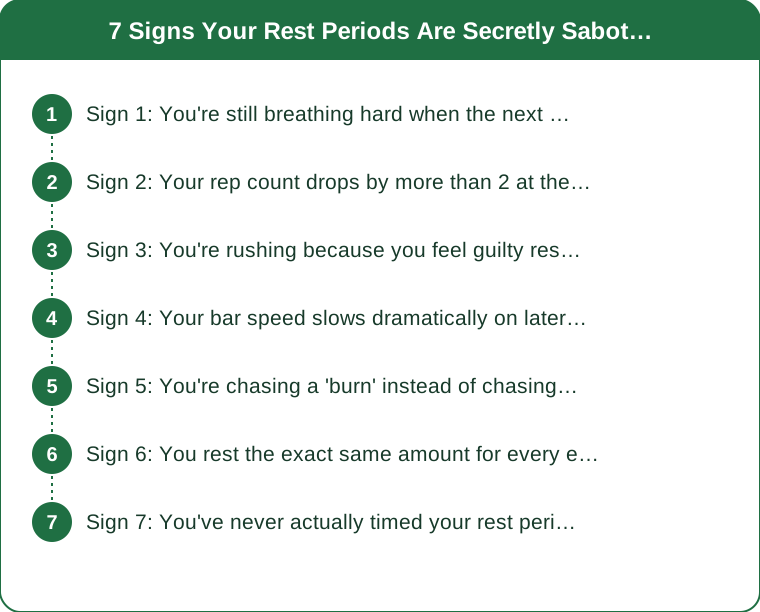
Sign 1: You’re still breathing hard when the next set starts
If your breathing hasn’t settled back toward normal before you pick the bar back up, your body hasn’t finished clearing the metabolic byproducts from the last set, and that unfinished recovery carries directly into your next attempt. This is one of the clearest physical signals that a rest period was cut short, independent of how the weight actually felt.
A simple fix is a hard rule: normal breathing before the next set starts, no exceptions, even if it stretches a workout by ten extra minutes.
Sign 2: Your rep count drops by more than 2 at the same weight
A meaningful rep drop set to set at an identical weight — going from 8 reps to 5, for example — is usually a recovery problem, not a strength problem, especially if the same drop doesn’t happen when you add an extra minute of rest. Lifters often misread this pattern as hitting a genuine limit, when it’s actually an incomplete-recovery pattern showing up as a fake plateau.
Testing one extra minute of rest for a week and comparing rep consistency is a low-cost way to check which one is actually happening.
Sign 3: You’re rushing because you feel guilty resting
Feeling like rest is ‘wasted time’ in the gym is a mindset problem that directly costs you strength, since heavy compound lifts specifically require full phosphocreatine system recovery, which takes measurably longer than most people intuitively rest for. Treating rest as unproductive time rather than part of the lift itself is a common reason serious lifters under-rest without noticing.
Reframing rest as literally part of the set — not a break from it — tends to fix the guilt reflex faster than any timer app does.

Sign 4: Your bar speed slows dramatically on later sets
A noticeable drop in how fast the bar moves on your third or fourth set, even at the same weight and rep target, is a strong sign your nervous system hasn’t recovered its full output capacity between sets. This is different from normal end-of-workout fatigue — it shows up specifically when rest has been consistently too short across the whole session.
Filming your first and last working set at the same weight is an easy way to actually see this pattern instead of just guessing at it.
Sign 5: You’re chasing a ‘burn’ instead of chasing strength
Short rest periods do produce more of a metabolic burn sensation, which feels productive — but for pure strength goals, that burn is often a sign you’re training a different adaptation than the one you’re trying to build. Mixing up the hypertrophy-style short-rest approach with a strength-focused program is one of the most common programming mix-ups lifters make without realizing it.
If the goal on the program is strength specifically, the burn isn’t the signal to chase — full recovery between attempts is.
Sign 6: You rest the exact same amount for every exercise
A heavy compound lift and an isolation accessory movement don’t require the same rest window, and using one blanket rest time across your whole session usually means one category is being systematically under-rested. Squats and deadlifts typically need longer recovery than bicep curls, simply because they demand more from the central nervous system per set.
Matching rest length to the actual demand of the lift, not a single fixed number, closes this gap quickly once you notice it.
Sign 7: You’ve never actually timed your rest periods
Most lifters estimate rest by feel, and felt time and actual elapsed time are reliably inaccurate once fatigue and conversation are involved — a rest that feels like three minutes is often closer to ninety seconds. This is the simplest sign on this list to fix, since it requires no program change, just an actual timer.
Running a stopwatch for even one week of training, without changing anything else, is often enough on its own to reveal exactly how much rest has actually been happening.
TL;DR:
- Struggling breathing and dropping bar speed on later sets both point to under-recovered rest periods
- A rep count that drops by more than 2 at the same weight is usually a rest problem, not a strength ceiling
- Strength-focused training needs longer rest than hypertrophy-style training — matching rest to goal matters
- Most lifters underestimate rest time by feel; an actual timer usually reveals the real gap
Rest periods rarely get the same attention as sets and reps, but for pure strength work they’re often the single easiest lever left to pull once form and programming are already solid.
Keep Reading
This article is for general informational and styling purposes only. Fit, sizing, and product availability may vary.