7 Signs Your Warm-Up Set Is Actually Too Heavy
Quick Answer: A warm-up is too heavy if your working sets feel noticeably harder than usual, your heart rate is already elevated before the first real set, or you need more than 4-5 warm-up sets to feel ready. Trimming warm-up load and volume usually restores working-set performance within a session or two.
Warm-ups are supposed to prepare you for the real work, not quietly use it up before you even get there.

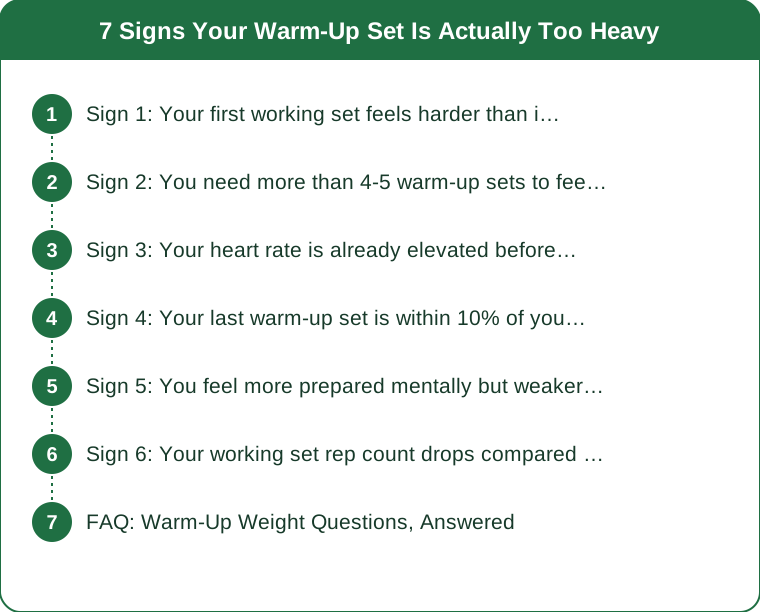
Sign 1: Your first working set feels harder than it should
If a weight that normally feels moderate suddenly feels close to max effort, excessive warm-up volume or load may have already fatigued the muscle before the working sets began.
Sign 2: You need more than 4-5 warm-up sets to feel ready
Most compound lifts need 3-5 graduated warm-up sets at most; needing significantly more usually reflects added volume out of habit or anxiety rather than genuine physiological need.
Sign 3: Your heart rate is already elevated before set one
Warm-ups should raise readiness without inducing real fatigue — an already-elevated heart rate and heavier breathing before the first working set is a sign the warm-up itself became a workout.

Sign 4: Your last warm-up set is within 10% of your working weight for multiple reps
A single-rep warm-up near working weight is normal, but multiple reps at 90%+ of working weight adds real fatigue that should be counted as part of total training volume, not just preparation.
Sign 5: You feel more prepared mentally but weaker physically
Some lifters over-warm-up out of nervousness rather than physical need, which can leave you feeling mentally ready while the muscle itself carries unnecessary pre-fatigue.
Sign 6: Your working set rep count drops compared to a fresher day
Tracking rep count at a consistent working weight across sessions can reveal whether an increasingly heavy or lengthy warm-up routine is quietly costing you reps over time.
Sign 7: You feel warmed up but not sharp
There’s a difference between feeling loose and feeling ready — excessive warm-up volume can produce the first without the second, since fatigue and readiness aren’t the same thing.
FAQ: Warm-Up Weight Questions, Answered
How many warm-up sets are actually recommended before a heavy lift?
Most coaching guidance suggests 3-5 graduated sets increasing toward working weight, with the final warm-up typically at 85-90% of the working set for a single rep.
Does this apply to all lifts equally?
Compound lifts like squats and deadlifts generally need more warm-up preparation than smaller isolation movements, which need much less.
Is under-warming up also a risk?
Yes — too little warm-up increases injury risk and reduces performance from a different direction, so the goal is calibrating volume, not eliminating it.
TL;DR:
- A warm-up that’s too heavy shows up as harder-feeling working sets and reduced reps
- 3-5 graduated warm-up sets is typical for most compound lifts
- Elevated heart rate or heavy breathing before set one signals excess warm-up fatigue
- Tracking working-set reps across sessions reveals whether warm-up volume is creeping up
A well-calibrated warm-up should leave you ready, not already a little tired before the real work starts.
Keep Reading
This article is for general informational and styling purposes only. Fit, sizing, and product availability may vary.