7 Signs You're Actually Plateauing, Not Just Having a Bad Training Week
Quick Answer: A real plateau shows up as numbers stuck across 3+ consecutive weeks, not just one off day, plus flat performance across multiple lifts rather than a single tired session. Here are 7 concrete signs worth acting on.
One bad session doesn’t mean anything. But when you start noticing the same weight on the bar week after week, it’s worth checking whether this is a real plateau or just noise.

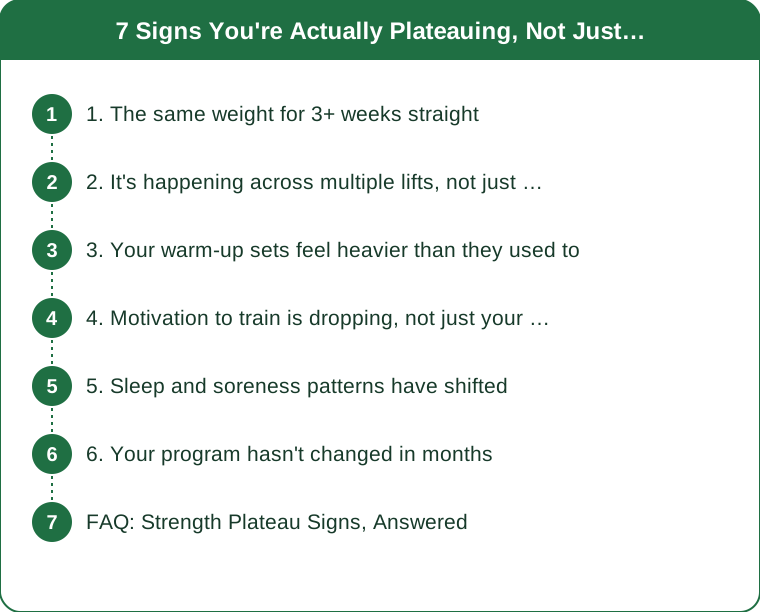
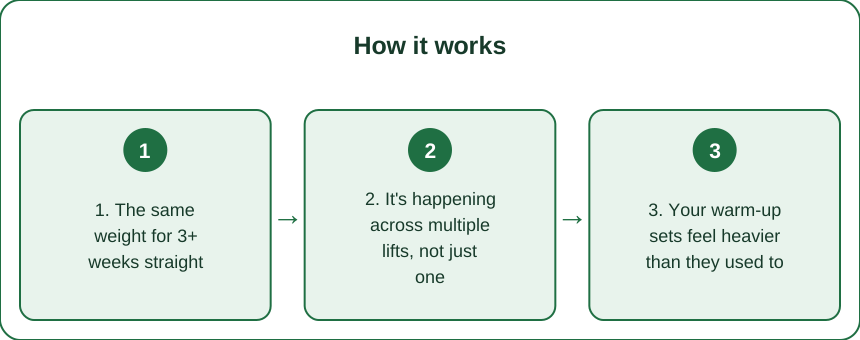
1. The same weight for 3+ weeks straight
A single stall week is normal fatigue variance. Three or more consecutive weeks at the identical working weight, with no rep increase either, is the clearest sign your current program has stopped driving adaptation.
2. It’s happening across multiple lifts, not just one
A stall on a single lift can be that lift’s normal wave pattern. Simultaneous stalling across your main compound lifts points to a broader issue — usually accumulated fatigue or a program that’s stopped providing enough stimulus.
3. Your warm-up sets feel heavier than they used to
If weights that used to feel automatic in your warm-up now require real focus, that’s a sign of accumulated fatigue or under-recovery, not just an off day — this shows up before your working sets even start.

4. Motivation to train is dropping, not just your numbers
Genuine plateaus often come with falling motivation and enthusiasm for sessions you used to look forward to. That combination — flat numbers plus flat motivation — is a stronger plateau signal than numbers alone.
5. Sleep and soreness patterns have shifted
Sleep quality declining
Worse sleep despite similar training load often precedes a visible plateau by a week or two.
Soreness lingering longer than usual
DOMS that used to clear in a day or two taking 3-4 days instead suggests recovery capacity is currently reduced.
6. Your program hasn’t changed in months
If the rep ranges, exercises, and progression scheme are identical to what you were doing 8-12 weeks ago, your body has likely fully adapted to that specific stimulus — this is a program design issue, not a willpower issue.
FAQ: Strength Plateau Signs, Answered
How long should I wait before assuming it’s a real plateau?
Generally 3 weeks of flat performance across multiple lifts is enough to justify a program adjustment rather than waiting longer.
Does a plateau mean I need to eat more?
Not necessarily — check recovery and program variety first; under-eating is one possible cause but far from the only one.
Should I deload immediately when I notice these signs?
A short deload (5-7 days reduced volume) is a reasonable first response before overhauling the entire program.
TL;DR:
- A real plateau means 3+ weeks flat, not one rough session
- Stalling across multiple lifts at once is a stronger signal than a single stuck lift
- Heavier-feeling warm-ups and lingering soreness often show up before the plateau is obvious
- An unchanged program for 8-12+ weeks is a common root cause worth addressing directly
Keep Reading
This article is for general informational and styling purposes only. Fit, sizing, and product availability may vary.