7 Signs You're Actually Ready to Move From Dumbbells to a Barbell
Quick Answer: You’re generally ready for a barbell once you can perform the dumbbell version of a lift with full control through a complete range of motion, hold a stable core under load, and understand basic bracing — not based on a specific number of weeks training.
There’s no universal timeline for ‘ready for a barbell’ — some people get there in a month, others take longer, and that’s fine. These seven signals are more useful than any calendar-based rule.

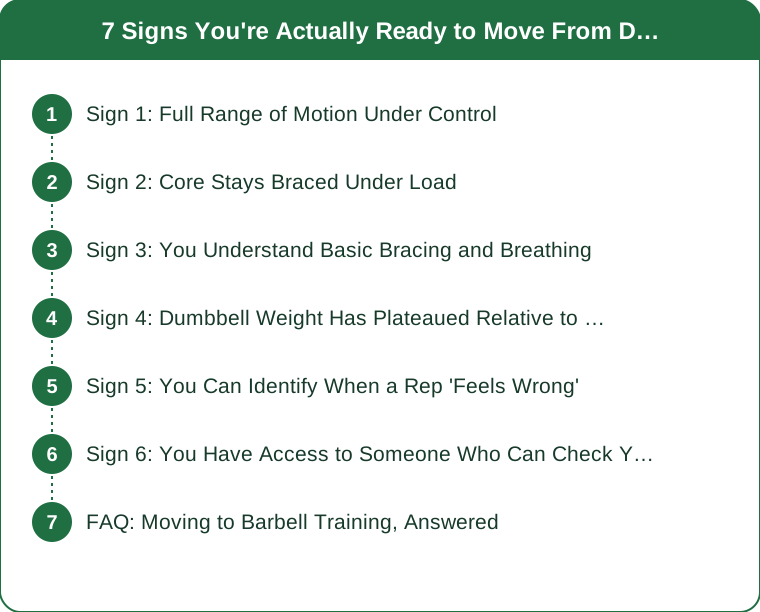
Sign 1: Full Range of Motion Under Control
If you can perform a dumbbell squat or deadlift pattern through a complete, controlled range of motion without compensating (rounding the back, knees caving), that control usually transfers well to barbell versions of the same movement.
Sign 2: Core Stays Braced Under Load
A barbell adds a fixed, less forgiving load path compared to dumbbells. Being able to maintain a braced core (not holding your breath, but genuine tension) through a full dumbbell set is a strong predictor of barbell readiness.
Sign 3: You Understand Basic Bracing and Breathing
Knowing how to take a breath and brace before a rep (rather than breathing haphazardly through the lift) matters more with a barbell, where the load is fixed to a bar rather than adjustable in each hand.

Sign 4: Dumbbell Weight Has Plateaued Relative to Bodyweight
If dumbbell progress has stalled and you’re using a weight that’s become genuinely challenging to load further with dumbbells alone, a barbell often provides the next practical progression.
Sign 5: You Can Identify When a Rep ‘Feels Wrong’
Body awareness — noticing when a rep felt off before it becomes a problem — matters more with a barbell’s fixed bar path. If you can already catch and correct form mid-set with dumbbells, that awareness transfers.
Sign 6: You Have Access to Someone Who Can Check Your Form
A trainer, knowledgeable friend, or mirror setup to check bar position and form for the first several barbell sessions removes a lot of the risk of learning a new movement pattern with more fixed loading.
FAQ: Moving to Barbell Training, Answered
Do I need to master every dumbbell exercise before trying a barbell?
No — readiness is usually movement-pattern specific. Being ready for a barbell squat doesn’t require mastering every dumbbell exercise, just the specific squat pattern.
Is it safe to start with just the empty barbell?
Yes — starting with just the bar (often 33-45 lbs depending on the bar) to groove the movement pattern before adding plates is standard practice, even for people who could lift more.
What if I don’t have anyone to check my form?
Recording yourself from the side and comparing to reputable form breakdowns is a reasonable substitute, though a single in-person check from a trainer for your first session is worth the cost if it’s accessible.
TL;DR:
- Full range of motion and a braced core under dumbbell load are the strongest readiness signals
- There’s no universal timeline — some people get there faster than others
- Start with just the empty bar to groove the pattern before adding plates
- A form check from a trainer or a mirror/video setup reduces risk on early barbell sessions
Readiness is about movement quality, not weeks logged in the gym.
Keep Reading
This article is for general informational and styling purposes only. Fit, sizing, and product availability may vary.