8 Reasons Your Left and Right Sides Lift Differently
Quick Answer: Some side-to-side difference is normal - most people have a 5 to 10 percent gap and it needs no intervention. Larger or growing differences usually come from one of eight causes, ranging from simple handedness and technique asymmetry to mobility restrictions and old injuries. The fix depends entirely on the cause, which is why generic advice to do more unilateral work resolves some imbalances and does nothing for others.
Your right side handles the dumbbell fine and the left one shakes on rep six. Same weight, same day, same person.

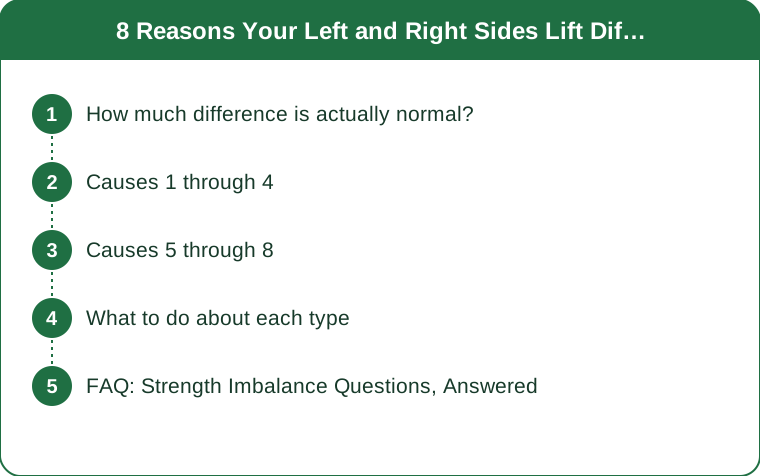
How much difference is actually normal?
Worth establishing before you try to fix anything.
Five to ten percent is typical and unremarkable. Almost everyone is asymmetric, and small differences have no effect on performance or injury risk for the vast majority of people.
Above roughly 15 percent is worth investigating. Not alarming, but likely to have an identifiable cause and worth understanding before it shapes your technique on bilateral lifts.
A growing gap matters more than an existing one. A stable 10 percent difference that has been there for years is very different from a 10 percent difference that was 5 percent in spring.
Endurance differences are more common than strength differences. Frequently both sides can lift the same weight for one rep, but one gives out at rep eight. That is a fatigue resistance gap rather than a maximum strength gap, and it responds to different work.
Compare like with like. Testing with a dumbbell tells you something different from testing with a machine, because stabiliser demand differs. Use the same test each time.
And measure rather than estimate. Perception of which side is weaker is unreliable. Test it - maximum reps at a fixed weight on each side, weaker side first - and write the numbers down.
Causes 1 through 4
1. Handedness and daily use
The most common and least concerning cause. Your dominant side does more of everything - carrying, opening, reaching - and accumulates more load over decades. This produces a stable, modest difference that needs no fixing.
2. Technique asymmetry on bilateral lifts
If you shift toward one side during squats or pull unevenly on a deadlift, the stronger side does progressively more of the work and the gap widens. This one is self-reinforcing and is the most important to catch, because the bilateral lift is actively training the imbalance.
3. Mobility restriction on one side
A stiffer ankle, a restricted shoulder, or a tight hip on one side changes the position you can achieve there. What presents as weakness is often a joint that cannot get into the strong position. Test range of motion on both sides before assuming it is strength.
4. An old injury you have stopped thinking about
An ankle sprain from years ago, a shoulder problem that resolved, a knee that was sore one winter. The pain goes and the altered movement pattern frequently stays, sometimes for a decade.

Causes 5 through 8
5. Nerve-related differences
Strength depends on the neural signal as much as the muscle. Anything affecting nerve conduction on one side - including some neck and lower back issues - can produce genuine one-sided weakness. Weakness with numbness, tingling, or pins and needles belongs to a doctor rather than to a training programme.
6. Sport or occupational loading
Tennis, throwing sports, and one-sided manual work all build substantial asymmetry over years. This is adaptive rather than dysfunctional, and it usually only needs attention if it is causing symptoms.
7. Set-up and equipment issues
Surprisingly common and easily missed. A bar that is not centred, a bench slightly off, a rack pin one notch different, or standing habitually off-centre all create apparent imbalances that are really measurement errors. Check this before anything else.
8. Genuine muscle size difference
Sometimes the muscle really is smaller, usually as a consequence of one of the causes above rather than as an independent cause. This is the slowest to change and requires consistent volume over months.
Identifying which applies is most of the work. Test range of motion first, check your set-up second, film a bilateral lift from the front third. Those three steps identify the cause for most people.
This is general information, not medical advice. One-sided weakness with numbness, tingling, or pain should be assessed by a professional promptly.
What to do about each type
The fix has to match the cause or it will not work.
For handedness and sport-related asymmetry: usually nothing. A stable, modest, symptom-free difference is not a problem requiring solving.
For technique asymmetry: film and correct it. This is the highest-priority fix because the bilateral lift keeps reinforcing it. A front-facing video of three reps will show the shift immediately, and the correction is a technique cue rather than extra volume.
For mobility restrictions: restore the range first. Adding strength work to a joint that cannot reach position trains a compensation. Mobility work on the restricted side, then strengthening.
For old injuries: unilateral work with intent. This is where dedicated single-side training genuinely helps, because it removes the stronger side’s ability to compensate.
For set-up issues: measure and standardise. Ten seconds of checking symmetry before each set solves it completely.
The general programming rule: set volume by the weaker side. Do the weaker side first, perform the same number of reps on both sides, and let the stronger one wait. Adding extra sets on the weak side helps some people and is less important than most people assume.
Expect three to six months for meaningful change. Neural adaptations arrive within weeks; genuine size differences take considerably longer. Retest every eight weeks rather than every session.
FAQ: Strength Imbalance Questions, Answered
How much strength difference between sides is normal?
Five to ten percent is typical and needs no intervention. Above about 15 percent is worth investigating, and a gap that is growing matters more than a stable one that has been there for years.
Will unilateral training fix my imbalance?
It fixes some causes and not others. It genuinely helps with old injury compensations and general asymmetry. It does nothing for mobility restrictions, set-up errors, or nerve-related weakness, which is why identifying the cause comes first.
Should I do extra sets on my weaker side?
Usually not extra sets - just lead with the weaker side and match its rep count on the stronger one. Setting volume from the weaker side is more effective and simpler than trying to catch up with additional work.
Why does one side fatigue faster even at the same weight?
That is an endurance difference rather than a maximum strength one, and it is more common. It typically reflects fatigue resistance and stabiliser capacity, and responds well to higher-rep unilateral work.
When should I see a professional about a strength imbalance?
When weakness comes with numbness, tingling, or pain, when it appeared suddenly, or when it is progressing despite sensible training. Those patterns suggest something that a programme change will not address.
TL;DR:
- A 5 to 10 percent difference is normal; above 15 percent or growing is worth investigating.
- Check set-up errors and mobility restrictions before assuming it is strength.
- Technique asymmetry on bilateral lifts is the most important cause to catch, because the lift reinforces it.
- Set volume from the weaker side, lead with it, and match reps rather than adding extra sets.
- Weakness with numbness or tingling is a medical question, not a programming one.
Everyone is asymmetric. The useful question is not whether you have an imbalance but which of the eight things is producing it.
Keep Reading
This article is for general informational and styling purposes only. Fit, sizing, and product availability may vary.