9 Signs Your Program Is Actually Working Even If the Scale Has Not Moved
Quick Answer: A working programme shows up as easier warm-up sets, better bar speed, faster between-set recovery, more reps at the same weight, less soreness from the same session, improved technique consistency, better sleep and appetite, higher session-to-session reliability, and eventually more weight on the bar. Load increases are the slowest indicator, not the first, which is why judging a programme by the scale or the barbell alone will make you quit something that is working.
Eight weeks in. Same weight on the bar. Same number on the scale.
Before you change the programme, check these nine.

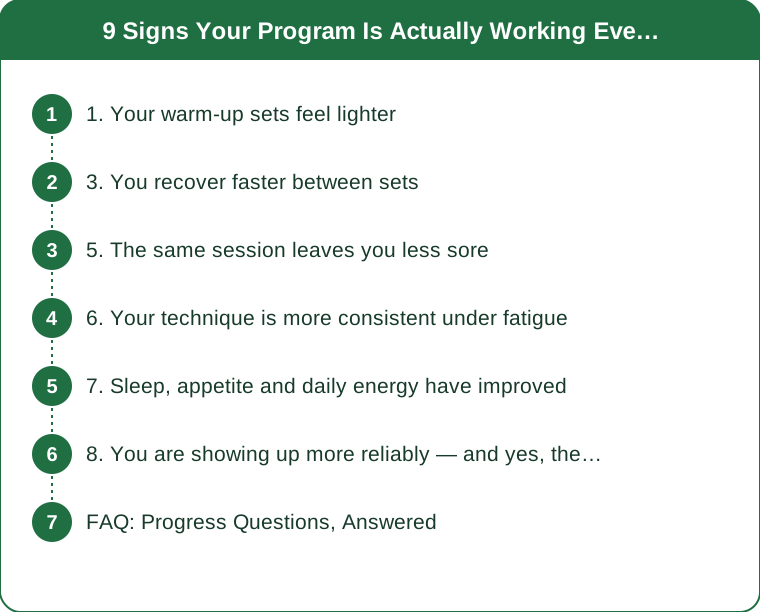
1. Your warm-up sets feel lighter
The clearest early signal and the one almost nobody tracks.
What to look for: the weight that used to be a genuine warm-up now feels trivially easy. If 40 kilos was a real effort in week one and feels like an empty bar in week eight, that is adaptation.
Why it matters: submaximal loads becoming easy precedes maximal loads increasing, often by several weeks.
How to track it: note a rate of perceived exertion for one fixed warm-up set every session. Same weight, same reps, RPE dropping over time.
2. Bar speed has increased at the same weight
Force production improves before load capacity visibly does.
What to look for: the same weight moving faster and more decisively, especially out of the bottom position.
Why it matters: velocity at a fixed load is a well-established proxy for strength. If it is moving faster, you are stronger, even if you have not tested a heavier set.
How to track it: film one working set every two weeks from the same angle. The difference is obvious on video and invisible in the moment.
3. You recover faster between sets
Work capacity improves early and is genuinely useful.
What to look for: being ready for the next set at two minutes when you used to need three, at the same load.
Why it matters: it reflects improved aerobic contribution to recovery and better efficiency, and it lets you do more total work per session.
How to track it: keep rest times fixed and note whether the later sets in a session are holding up better than they used to.
4. You are getting more reps at the same weight
The most direct form of progress that is not load, and the most commonly overlooked.
What to look for: eight reps where you used to get six, at an identical weight and effort level.
Why it matters: this is progressive overload. Volume increases at fixed load drive adaptation just as load increases do.
How to track it: write down reps, not just weight. A log that only records weight hides most of your progress.
5. The same session leaves you less sore
Repeated bout effect, and it means your tissue tolerance has improved.
What to look for: a leg session that used to ruin two days now producing mild soreness for one.
Why it matters: it means recovery capacity has increased, which lets you train more frequently, which drives further progress.
The caveat: less soreness is a sign of adaptation, not a sign of insufficient training. Soreness is a poor measure of session quality.

6. Your technique is more consistent under fatigue
The quality of your fifth set relative to your first is a real progress marker.
What to look for: the last rep of the last set looking much like the first rep of the first set.
Why it matters: technical consistency under fatigue reflects motor learning and stability, both of which precede meaningful load increases.
How to track it: film the first and last set of one exercise every few weeks and compare them side by side.
7. Sleep, appetite and daily energy have improved
The systemic signals, and the ones that predict whether you will still be training in a year.
What to look for: falling asleep faster, waking less, a genuine appetite, and not needing a nap after training days.
Why it matters: these indicate that training load and recovery are in balance. Their absence is one of the earliest warnings of doing too much.
The red flags: disrupted sleep, appetite loss, persistent fatigue and irritability alongside stalled performance suggest under-recovery rather than a bad programme.
Seasonal note: shorter days and colder mornings affect all three of these independently of training. Judge them relative to how you feel outside the gym as well as in it.
8. You are showing up more reliably — and yes, the bar is moving
Consistency is a performance metric, and load is the last one to arrive.
What to look for in adherence: four sessions in a week you would previously have skipped entirely. Attendance is the variable most strongly associated with long-term results and the one least often tracked.
Why it matters: a mediocre programme done consistently outperforms an excellent one done sporadically, every time.
9. And eventually, more weight on the bar
What to look for: load increases arriving in small, sustainable steps rather than dramatic jumps.
Why it is last: for anyone past the first few months, load progresses slowly and unevenly. Expect small increments over months rather than weekly personal bests.
What is normal: in the first year, roughly 1 to 2.5 kilograms added to upper body lifts and 2.5 to 5 kilograms to lower body lifts per month is good progress, and it slows after that.
When to actually change the programme: no progress across any of the nine indicators for six to eight weeks, with sleep and nutrition in reasonable order. That is a stall. Anything less is impatience.
FAQ: Progress Questions, Answered
How long before I should expect visible changes?
Strength changes appear within weeks, visible body composition changes typically take three to six months of consistent training and adequate protein.
Why has the scale not moved?
Because muscle gain and fat loss can offset each other, and because water retention from new training masks changes for weeks. Measurements and photos are more informative than weight.
Should I change programmes if I stall on one lift?
No. One stalled lift is normal. Change something about that lift — volume, frequency, exercise variation — not the whole programme.
Is soreness a sign of a good session?
No. It reflects novelty and eccentric stress more than effectiveness. Progress is measured by performance, not by discomfort.
How often should I test maximum strength?
Rarely. Every three to four months at most. Testing frequently costs recovery and tells you little that your working sets do not.
TL;DR:
- Warm-ups feeling lighter and bar speed increasing come first, weeks before load does.
- Track reps, not just weight. More reps at the same load is textbook progressive overload.
- Less soreness and faster between-set recovery are adaptation, not slacking.
- Sleep, appetite and consistency are performance metrics. Watch them.
- Only call it a stall after six to eight weeks with no movement on any indicator.
Write down one fixed warm-up set’s RPE every session. It is the cheapest progress signal available.
Keep Reading
This article is for general informational and styling purposes only. Fit, sizing, and product availability may vary.