Your First Barbell Day: From Dumbbell Corner to the Big Rack
Quick Answer: Start with the empty bar — it weighs 20kg (45lb) and it’s a legitimate training weight for squats and presses. Set the rack with the bar at collarbone height and the safety pins just below your bottom squat position, run three lifts (squat, overhead press, deadlift), and strip your plates when you’re done. Nobody judges an empty-bar session; everyone had one.
The barbell section is the dumbbell corner’s intimidating neighbor. Plates clanging, racks occupied, unspoken protocols you’re apparently supposed to already know.
But the barbell isn’t an advanced tier. It’s just the logical next chapter of the same strength story — and the empty bar, 20kg of honest resistance, is exactly where every lifter in the room started.
Is the Empty Bar a Real Weight?
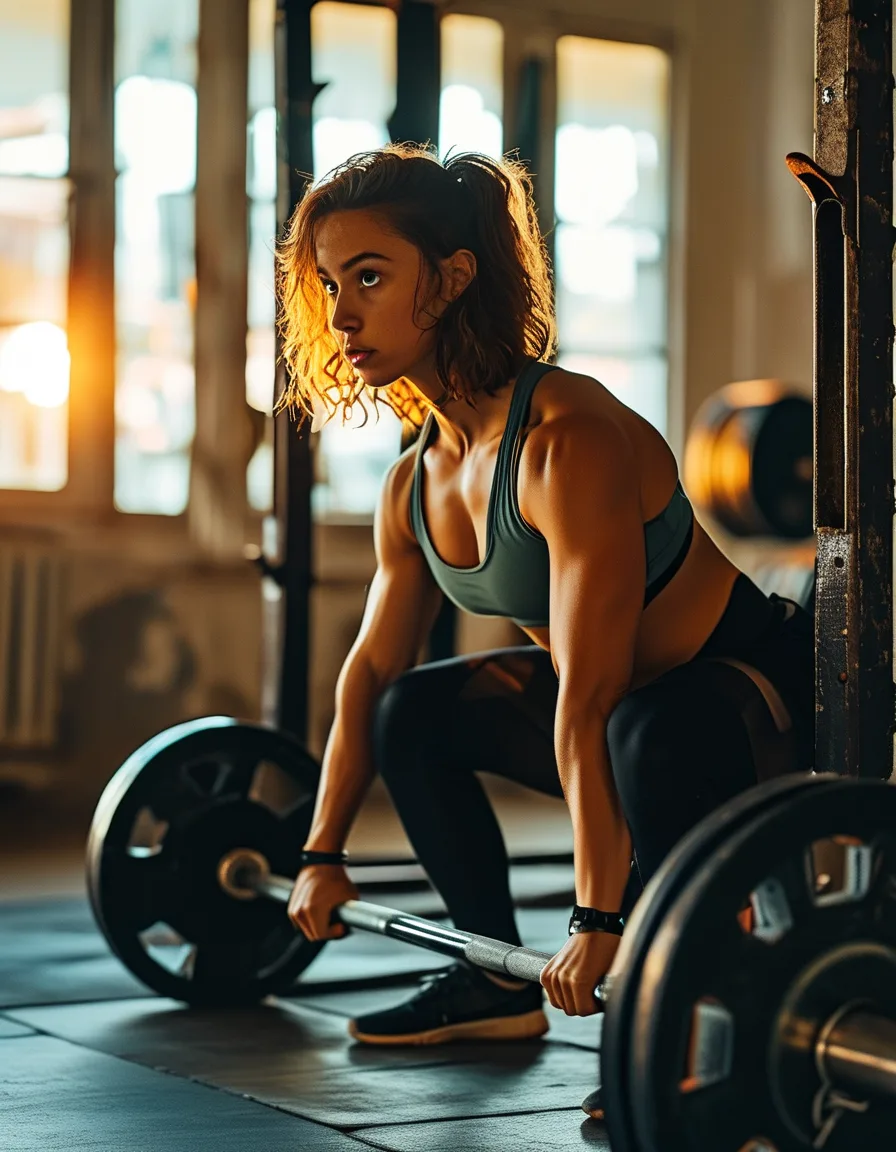
Yes. A standard Olympic barbell weighs 20kg / 45lb, and a women’s bar weighs 15kg / 35lb.
That’s a legitimate starting weight for squats and presses, and it’s a completely normal working weight for a first month. Twenty kilos overhead for sets of eight is not nothing.
Nobody who actually lifts judges an empty-bar session. They all had one, and most of them still warm up with exactly that. The people who might judge you are not the people whose opinion has any weight, so to speak.
Plates are chapters two onward. There’s no rush — every kilo you add too early is a kilo of technique you skipped.
How Do You Set Up the Squat Rack?
Two settings, two minutes, every single time.
Bar height: at about collarbone level. You want to dip under the bar and stand up into it — not tiptoe up to lift it off. If you’re rising onto your toes to unrack, the bar is too high, and that’s a genuinely awkward way to start a heavy set.
Safety pins: just below your bottom squat position. Squat down empty-handed, note where your hips end up, and set the pins an inch or two below where the bar would be.
Those pins are the entire reason solo lifting is safe. If a rep fails, you sit the bar down on them and walk out. Set them every time — including the sets you’re sure about, because those are the ones that surprise you.
Two minutes of setup outranks any amount of courage.

What Should You Lift on Day One?
Three lifts. That’s a complete session and it leaves months of progress runway.
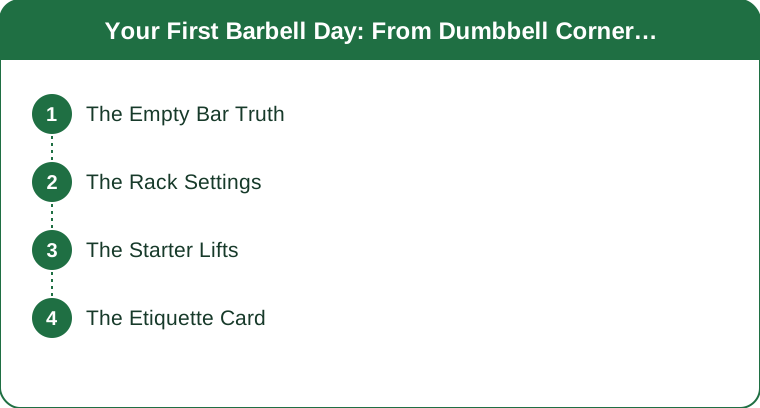
1. Barbell squat. If you’ve been doing goblet squats, the pattern transfers directly — same depth, same knee tracking, the load has just moved to your back. Start with the empty bar for 3 sets of 5.
2. Overhead press. Strict, empty bar, no leg drive. Bar starts at collarbone height, finishes with your ears in front of your arms at the top. 3 sets of 5.
3. Deadlift. Learn this one with light plates on the bar so it sits at the correct height, or with a coach’s eye on the first few sessions. The hinge you built with kettlebells is the prerequisite, and it transfers well.
Three lifts, twenty-five minutes, and you’ve done a real barbell session.
What Nobody Tells You About Rack Etiquette
The rules fit on a napkin, and knowing them removes most of the intimidation.
- Strip your plates afterward. Bar back to empty. This is the one that actually annoys people.
- Ask “how many sets do you have left?” during. Don’t hover silently three feet away — it reads as passive-aggressive and everyone hates it.
- Working in is normal. Alternating sets with someone on the same rack is standard practice, not an imposition.
- Chalk and effort are welcome; plate-slamming is theater. Set the bar down; don’t drop it unless you’re in a designated area with bumper plates.
- Don’t curl in the squat rack. Yes, it’s a meme. It’s also true — racks are the bottleneck, and curls need no rack.
That’s the whole code. The barrier was always cosmetic.
FAQ
How do I know when to add plates?
When the last rep of your last set stops feeling hard. On squats and deadlifts, add 2.5kg (5lb) per side; on the overhead press, 1.25kg (2.5lb) per side — the press progresses far more slowly than the legs, and that’s normal.
Do I need a spotter?
Not for squats if your safety pins are set correctly — that’s what the pins are for. For bench press, either use pins at the right height or ask someone. Bench is the one lift where getting stuck under the bar is a genuine problem.
Should I wear a belt on day one?
No. A belt is a tool for heavy loads, and using it before you’ve built bracing strength just masks the skill you’re supposed to be developing. Revisit the question when you’re squatting well above bodyweight.
What if the racks are always busy?
Ask to work in — it’s normal and almost always accepted. Failing that, run your squats in a half rack or with a trap bar, and shift your barbell day to an off-peak hour. Gyms are quietest mid-morning and after about 8pm.
TL;DR:
- The empty bar is 20kg/45lb — a legitimate starting weight, not a placeholder
- Set the bar at collarbone height so you dip under it, not up to it
- Safety pins just below your bottom squat position, every session
- Three starter lifts: squat, strict overhead press, deadlift
- Add 2.5kg/5lb per side on legs, 1.25kg/2.5lb per side on the press
- Strip your plates; ask how many sets are left; working in is normal
- Skip the belt until the loads are genuinely heavy
Empty bar first, pins set always, three lifts, plates stripped after. The big rack was never a members-only zone — it’s a queue you now know how to join.
New to loaded hinging or coming back from a back injury? A session or two with a coach on the deadlift is the best money in the sport. Sharp pain is a stop signal, not something to train through.
Keep Reading
This article is for general informational and styling purposes only. Fit, sizing, and product availability may vary.