Progressive Overload Without Adding Weight: 5 Ways to Progress When the Next Dumbbell Is Too Big
Quick Answer: Weight is only one of five progression levers. When the next dumbbell jump is too big, progress by adding reps (8→12), adding sets, slowing the lowering phase to 3-4 seconds, shortening rest periods, or improving range of motion. Each one is measurable overload — log it like you’d log weight.
The gap between your 20-pound and 25-pound dumbbells is 25%. Nobody tells you that’s a huge jump — they just let you fail at 25, go back to 20, and conclude you’ve plateaued. You haven’t. You’ve just been using one lever on a five-lever machine.
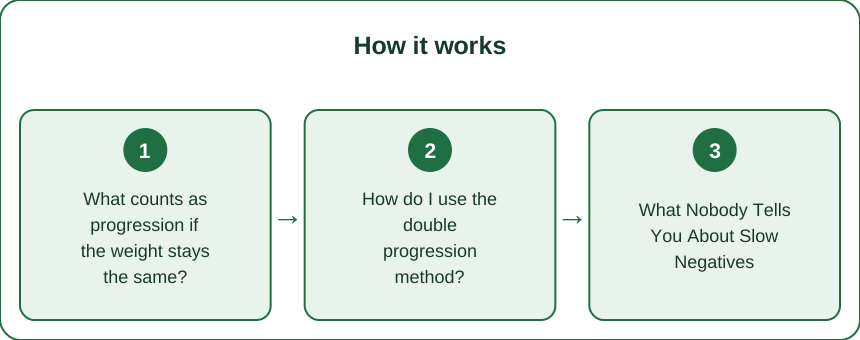
What counts as progression if the weight stays the same?
Overload means asking your muscles for more than last time — and ‘more’ has five currencies:
- More reps: The classic bridge. Ride 8 reps up to 12 before even thinking about the next dumbbell.
- More sets: 3 sets of 10 → 4 sets of 10 is a 33% volume increase with zero new equipment.
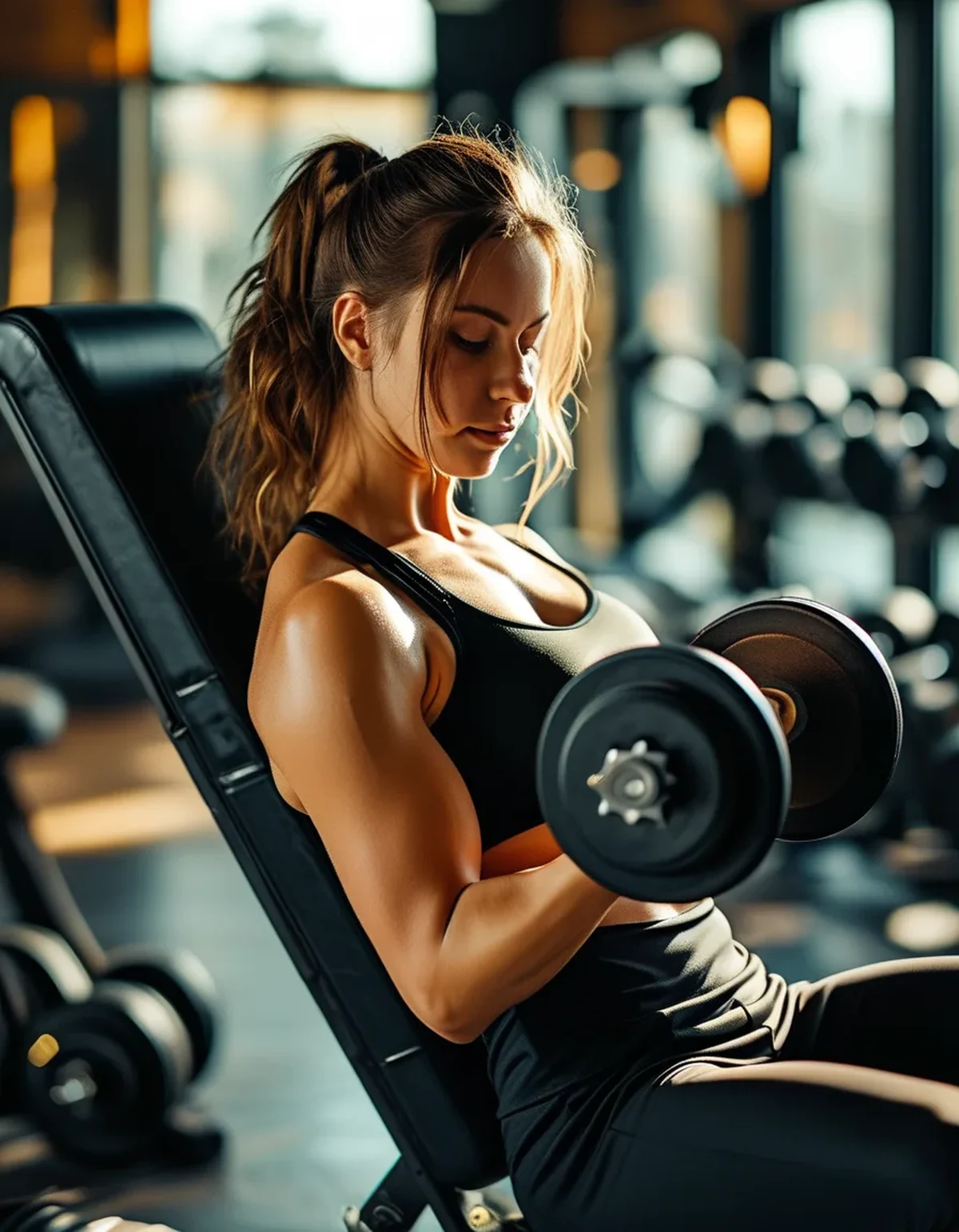
- Slower tempo: A 3-4 second lowering phase can make the same dumbbell feel two sizes heavier — and lowering slowly is disproportionately good at driving growth.
- Less rest: 90 seconds → 60 seconds forces the same work from a less-recovered muscle.
- Better range: Deeper squat, fuller stretch at the bottom of a press. Range you didn’t have is load your muscles never saw.
Every one of these is real, measurable overload. The barbell math crowd just forgets the other four exist.
How do I use the double progression method?
Double progression is the simplest system that never stalls between sizes:
- Pick a rep window — say 8 to 12.
- Work every set toward the top of the window at your current weight.
- When all sets hit 12 with solid form, jump to the next weight and drop back to 8s.
- Climb again.
Example with a 20 lb press: 3x8 → weeks pass → 3x12 → move to 25 lb at 3x8 (which is doable now, because a muscle that presses 20 for 12 clean reps is ready for 25 at 8). The 25% dumbbell gap that used to stop you becomes a ramp instead of a wall.
One rule makes or breaks it: log every session. Double progression without a log is just vibes.
What Nobody Tells You About Slow Negatives
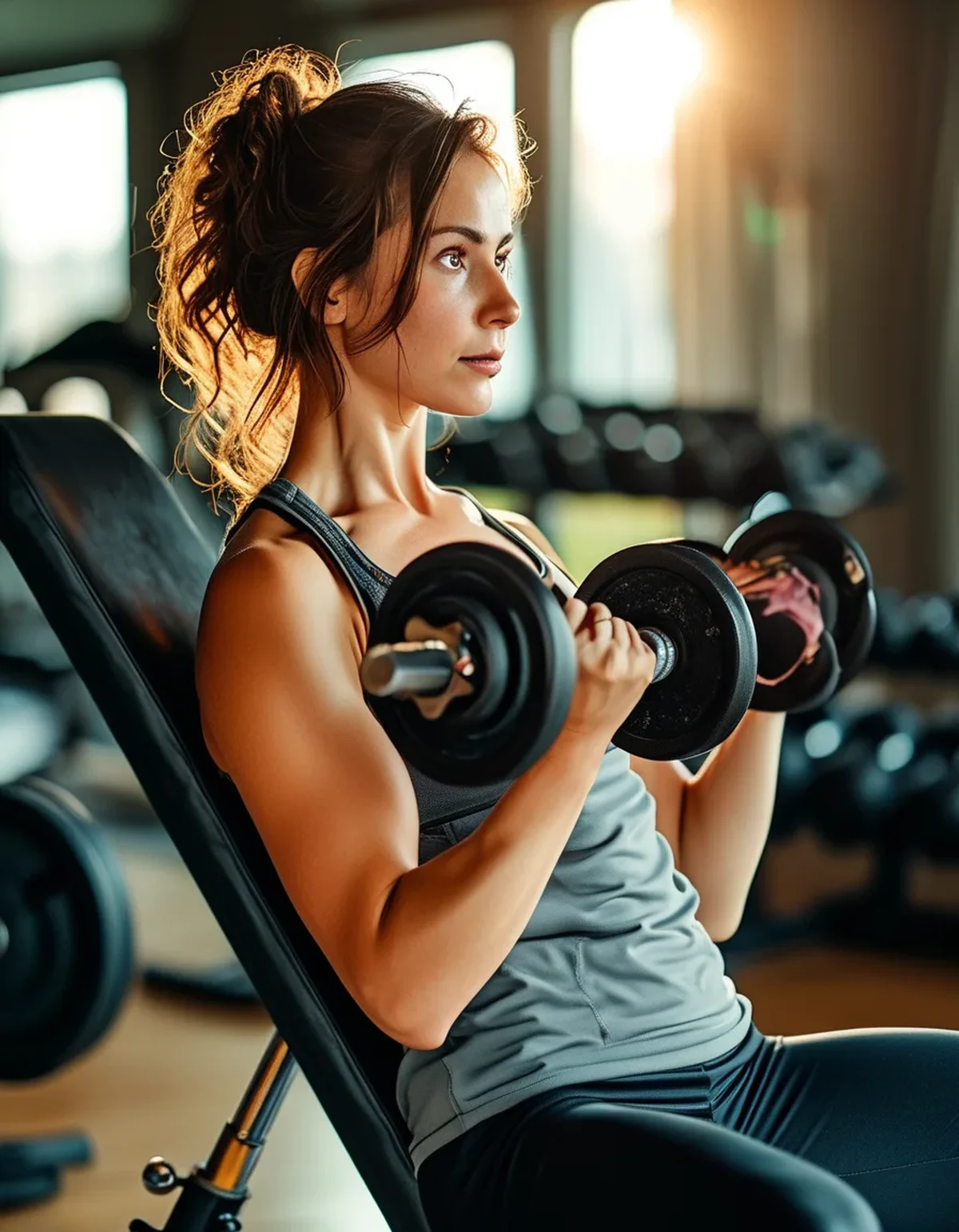
The lowering (eccentric) phase is where you’re strongest — most people can lower about 20-40% more than they can lift. Which means the lowering phase of your current weight is chronically understimulated if you’re letting gravity do it.
Try this with your ‘too easy’ dumbbell: 4 seconds down, 1 second pause, normal speed up. Three sets of 10 becomes genuinely hard — same dumbbell, transformed exercise. Expect more next-day soreness than usual at first; eccentric work is famous for it. Start with one slow-tempo exercise per session, not a whole workout.
This is also the cheapest ‘new dumbbell’ you’ll ever buy: a 20-pounder lowered in 4 seconds asks roughly what a 25 asks at normal speed.
FAQ: No-New-Weight Progression Questions, Answered
How long can I keep progressing without heavier weights?
Months, realistically — cycling reps 8→12, adding a set, then tightening tempo covers a long runway. Eventually you’ll want the next load step, but you’ll arrive at it strong instead of stuck.
Which lever should I pull first?
Reps first (simplest to track), then tempo (biggest difficulty jump per change), then sets (best when you have time), then rest periods. Range of motion is a continuous project underneath all of them.
Do these levers work for bodyweight exercises too?
Especially well — push-ups with a 4-second descent, pause squats, shorter rests between plank sets. Bodyweight training basically is the art of these five levers.
TL;DR:
- Weight is 1 of 5 overload levers: reps, sets, tempo, rest, and range are the other 4
- Double progression (ride 8→12 reps, then jump weight and reset to 8) turns big dumbbell gaps into ramps
- A 4-second negative makes your current dumbbell perform like the next size up
- Log everything — unlogged progression is just optimism
The next dumbbell was never the only way forward; it was just the only one anyone wrote on the label.
Keep Reading
This article is for general informational and styling purposes only. Fit, sizing, and product availability may vary.